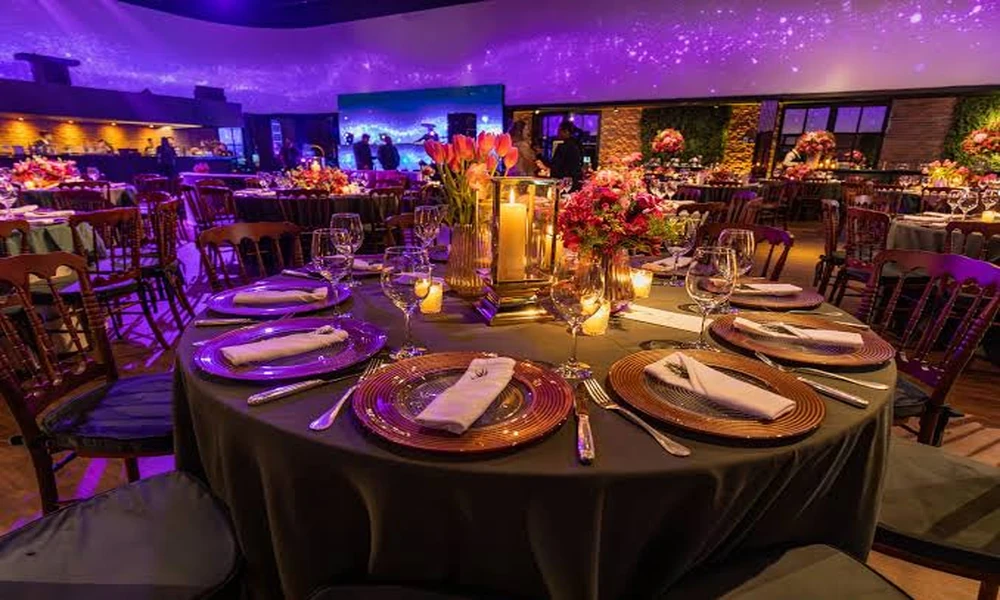
A reception room can photograph beautifully and still feel awkward to use. Tall flowers hide faces, a food station blocks the entrance, and guests carry plates through the space reserved for dancing. Good wedding design considers movement as carefully as colour. The room should work for the people inside it before it works for the camera.
Food has a part in that design. Its presentation, location and timing influence what guests notice and how they move. Treating the meal as an early design decision gives decorators and caterers a better chance of producing a coherent room.
Build the palette around real materials
Start with the room’s existing surfaces rather than a collection of inspiration photographs.
Notice what the venue already contributes
A timber barn, pale courtyard and dark dining room each bring colours that will remain visible throughout the event. Linen and flowers need to work with those surfaces. Trying to hide every part of a venue can cost more while producing a less convincing result.
Look at the space during the hours when the reception will happen. Daylight and evening lamps can make the same fabric appear different. Ask to see samples together rather than approving each detail separately on a screen.
Let food contribute without dictating everything
Grilled vegetables, bread and herbs bring their own colours and textures. They can complement a restrained table without needing matching decorative objects.
For Italian wedding plans, catering matrimoni provides a route into researching the meal alongside the decoration. Bring the proposed menu to the design discussion so serving dishes, table space and the room’s palette are considered together.
The goal is coordination rather than identical colours on every surface. A plate of food should still look like something intended to be eaten.
Decide where the eye should travel
A room needs clear points of attention, with enough ordinary space between them.
Choose one arrival impression
Guests arriving through a narrow doorway cannot comfortably take in flowers, a seating chart, welcome drinks and a food display all at once. Decide what they need first.
Usually that means understanding where to go and where to leave belongings. Decorative detail can follow along the route. This gives the room a sequence rather than a crowded entrance.
A useful test is to imagine arriving with a coat, a gift and limited knowledge of the venue. The design should answer practical questions without requiring a member of staff at every turn.
Keep working areas readable
If guests collect food, they should understand where the queue begins and where to move afterwards. Avoid placing a photograph backdrop directly beside that route.
Live cooking also needs a clear boundary. People may want to watch, but the kitchen team requires space for its work. Agree the viewing area with the supplier rather than marking it according to the best camera angle.
Use table height with restraint
Variation gives a table character, but height should not make conversation difficult.
Try the arrangement from a guest’s seat
A centrepiece that looks modest while standing may block the face of the person opposite. Test the complete arrangement at seated eye level, with glasses and serving dishes in place.
If dishes will be shared, reserve their space before approving extra decoration. Guests should not have to move fragile objects every time bread arrives.
This practical trial can be done on one sample table. It often reveals more than another round of individual product photographs.
Give menus enough breathing room
Printed menus work best when the lettering is readable under the actual evening lighting. Decorative lettering may suit a heading while simpler type carries dish descriptions.
Keep dietary information clear and confirm wording with the caterer. The menu should help guests communicate their needs rather than attempt to answer every allergy question by itself.
Make lighting serve more than photographs
The evening needs enough light for eating, walking and recognising faces.
Separate dining and performance needs
A musician may need one lighting arrangement while guests need another at their tables. Discuss these requirements before hiring decorative lamps.
Ask who controls the room lighting and when changes happen. A dramatic reduction during a performance can leave servers and guests struggling to move around.
Food stations also need suitable lighting. Guests should be able to read labels and see what is being served without using a phone torch.
Test reflective surfaces
Mirrors, glass and polished metal can add unwanted glare when a lamp faces them directly. Move around the sample table and check several viewpoints.
A design does not need to appear identical in every photograph. It should remain comfortable from the seats that guests will actually occupy.
Edit before adding
The last design stage is often subtraction. Remove an object that crowds the table or relocate a display that interrupts circulation.
Ask what each detail contributes
An item may guide people, support the meal, provide light or carry personal meaning. If nobody can explain its purpose, it may be optional.
When discussing catering matrimoni with suppliers, apply the same test to elaborate presentation equipment. The display should make service clearer or food more appealing, rather than consume space for its own sake.
Leave a room people can inhabit
A reception is a place for coats over chairs, half-finished conversations and guests returning for water. Allowing for ordinary human use makes the design more persuasive.
The room will change as the evening progresses. Good planning gives it enough room to do so without losing its character. The most successful arrangement is one that still feels welcoming after the first plates have been cleared.