
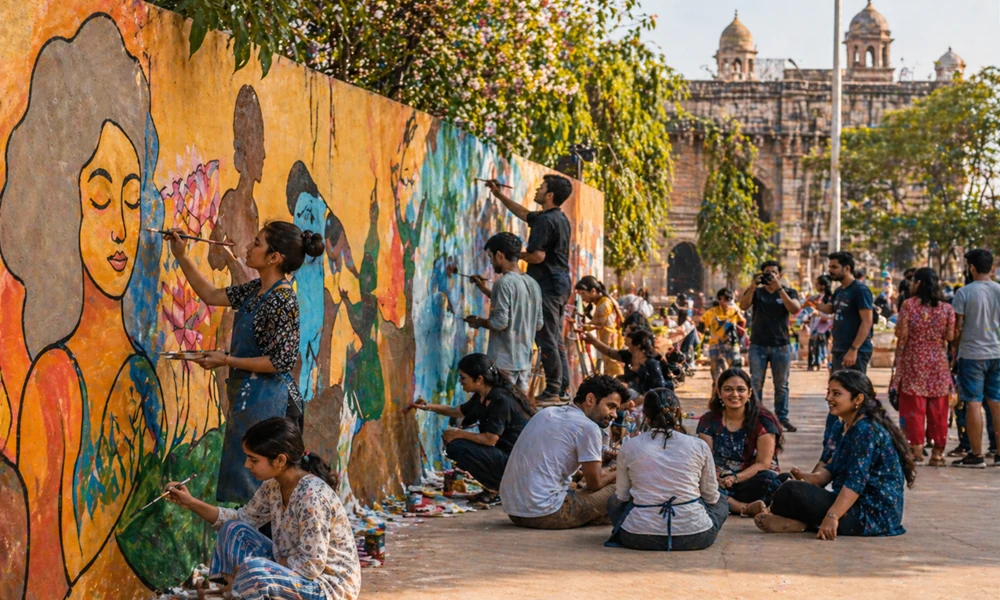
Regional identity infusion
A painter who never leaves the place that shaped them tends to carry that place into every canvas. The colour choices shift. The subjects lean toward something familiar. Canadian contemporary art is rooted in the landscape and community rather than reaching for imports. Bruce Bailey Toronto connections keep coming up because collectors and patrons decide, in quiet and unglamorous ways, which artists get pushed to bigger stages and which stay local.
None of this stays local once an artist actually earns institutional weight behind them. A painter working from a small Ontario studio might, given a few years and the right introductions, end up with work hanging in Venice or discussed in Montreal circles. That leap rarely happens on talent alone. Curators and philanthropic figures matter here precisely because they don’t make the art; they move it, dragging regional work into rooms it wouldn’t otherwise reach.
Where do Canadian artists gain visibility?
Visibility hardly ever comes from just one place. Museums, biennales, and smaller curatorial projects each crack open a different door, and Canadian artists have gone through all three at different points over the years.
People still bring up Peter Doig’s early career as proof that a Canadian connection, formed long before any international recognition, can quietly steer everything that comes after. Kent Monkman’s path through major institutions follows something similar: local backing arriving first, bigger recognition much later. Neither of these is really a one-off story. They both suggest the same thing: support inside Canada tends to precede whatever wider acceptance comes next.
Fine art projects designed for early career artists specifically have done real work in this area, giving painters and photographers space to show riskier, more ambitious pieces well before commercial galleries would ever touch them.
Museum collaborations abroad
Canadian institutions hold onto long relationships with overseas museums, and those relationships often decide which artists actually make it across and stay there. The Montreal Museum of Fine Arts has remained a fairly constant partner in this, hosting collections and backing programming that puts Canadian talent in front of audiences well outside the country.
These partnerships almost never form from one donation or a single well-timed gesture. They build slowly, sometimes across decades, through repeated back and forth between collectors, curators, and institutional staff who understand both the home scene and what larger international venues actually expect from a show.
- Long partnerships build a kind of trust that no single exhibition manages to replicate.
- Canadian artists pick up real credibility once their pieces sit next to internationally known names.
- War art, landscape work, and portraiture have all passed through these exchanges at one point or another.
Cultural diplomacy through art
Canadian participation at the Venice Biennale reflects how art has long worked as a form of cultural diplomacy. Historical pieces displayed alongside contemporary responses raise awareness of a country’s larger story.
That kind of curation takes real thought about sequencing. Older, war-era pieces sit close to newer responses, and the pairing creates a dialogue that stretches across time instead of freezing in one single moment. What comes out of it isn’t promotion, not really. It’s closer to placing a Canadian point of view inside a conversation that was already happening internationally, and making sure it doesn’t slip out of the room unnoticed.
Local culture doesn’t just produce art in the end. It shapes the questions art keeps circling back to, and through steady institutional and philanthropic push, those questions eventually reach audiences far past wherever they first got asked.


